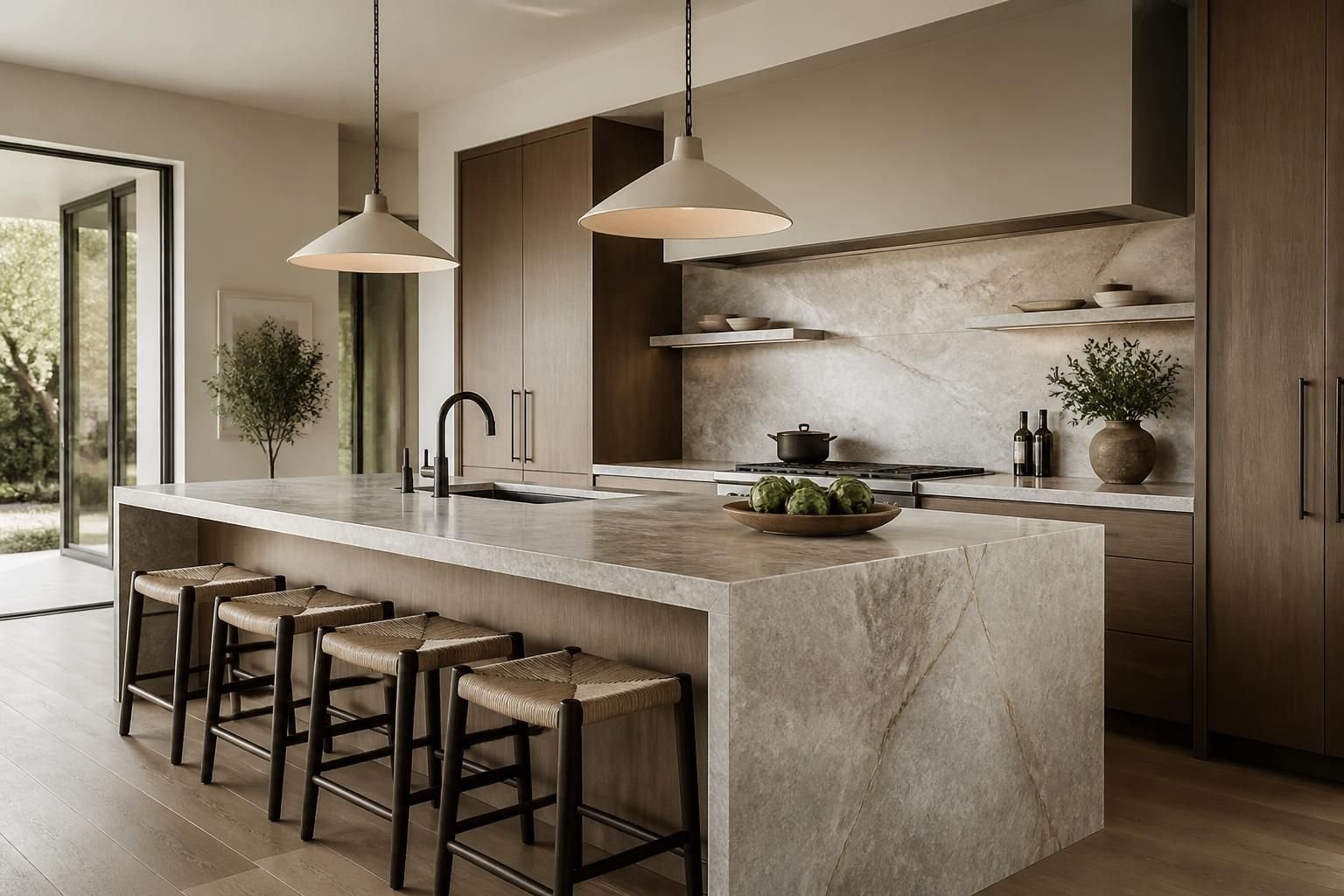
Plano Countertops helps homeowners and businesses across Plano, TX choose, fabricate and install the right countertop. Quartz and granite dominate kitchen countertop choices in Plano, and they overlap so much on price that cost rarely settles it. What does settle it is a handful of practical differences that matter more in North Texas than they do elsewhere.
The short version
Granite is natural stone, porous, needs sealing, tolerates heat, and is UV-stable. Quartz is engineered from ground stone and resin, is non-porous, never needs sealing, stains less, and does not like heat or sun.
Everything below is detail on those five points.
Heat
This is the biggest functional difference. Granite handles a hot pan set directly on it; the risk is thermal shock at an existing flaw, which is uncommon. Quartz has a resin binder that will scorch, discolour or craze at temperatures a hot pan easily reaches.
If you cook heavily and put pans down without thinking, granite is the forgiving choice. If you will use trivets, quartz is fine — millions of kitchens run on it without incident.
Sunlight
North Texas gets a lot of direct sun, and a west-facing kitchen window puts a hard band of light across the counter every afternoon. Granite does not care. Quartz can discolour over years of direct UV, and manufacturers generally exclude sun damage from the warranty.
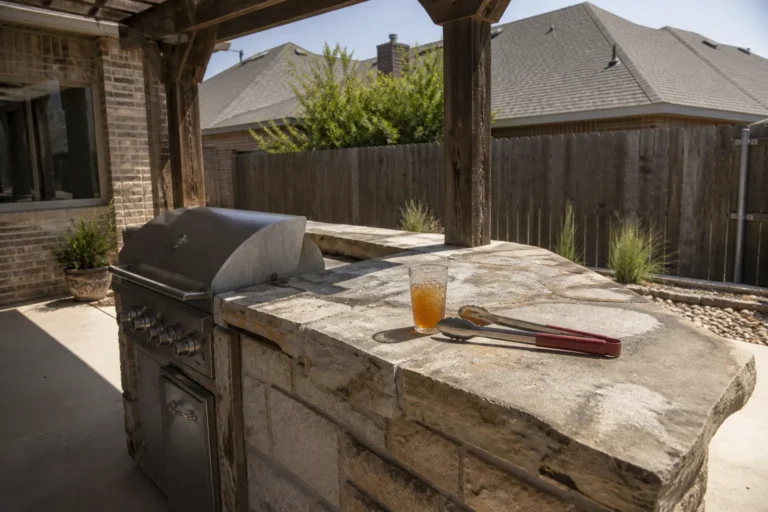
In practice, indoor quartz behind normal glass is rarely a problem. But if a section of your counter sits in full direct sun for hours daily, or if any of the surface is in a sunroom or on a covered patio, granite or porcelain is the safer call. Quartz is not suitable for outdoor countertops at all.
Hard water
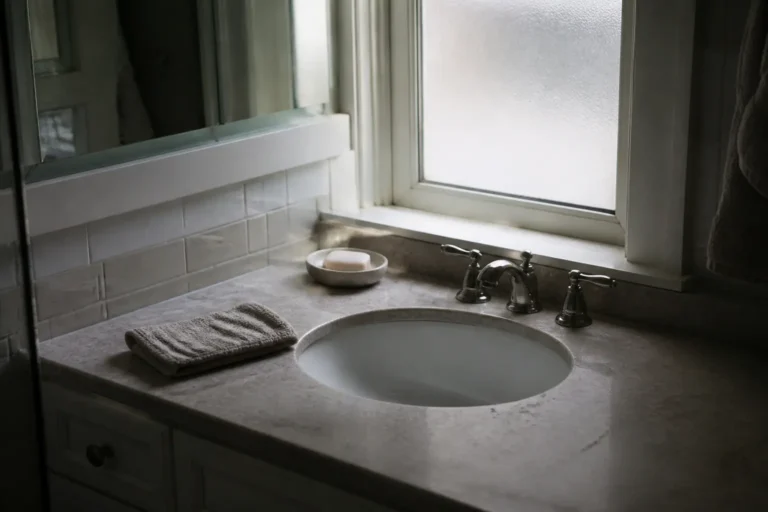
Much of the Plano area has hard water. Mineral deposits build up around faucets and along the sink edge on any surface, but they are harder to remove from a porous, sealed stone than from non-porous quartz.
Quartz wins here. A granite counter near a hard-water faucet needs the deposits wiped regularly rather than allowed to build, and aggressive descaling products can strip granite sealer.
Sealing and maintenance
Granite needs sealing, typically every one to three years depending on the stone’s density and how it is used. The test is simple: put a few drops of water on the surface near the sink and leave them fifteen minutes. If the stone darkens where the water sat, it is time to reseal.
Quartz needs nothing. Soap and water. That is the entire maintenance schedule, and for a lot of households it is the deciding factor.
Stains
Quartz resists staining almost completely. Granite, when properly sealed, resists most everyday spills, but oil, red wine and turmeric left overnight on a light or poorly sealed granite can leave a mark.
Darker granites are much more forgiving than light ones on this point.
Appearance
Granite is natural, so every slab is unique and you should see your actual slab before buying. That unpredictability is either the appeal or the drawback depending on the person.
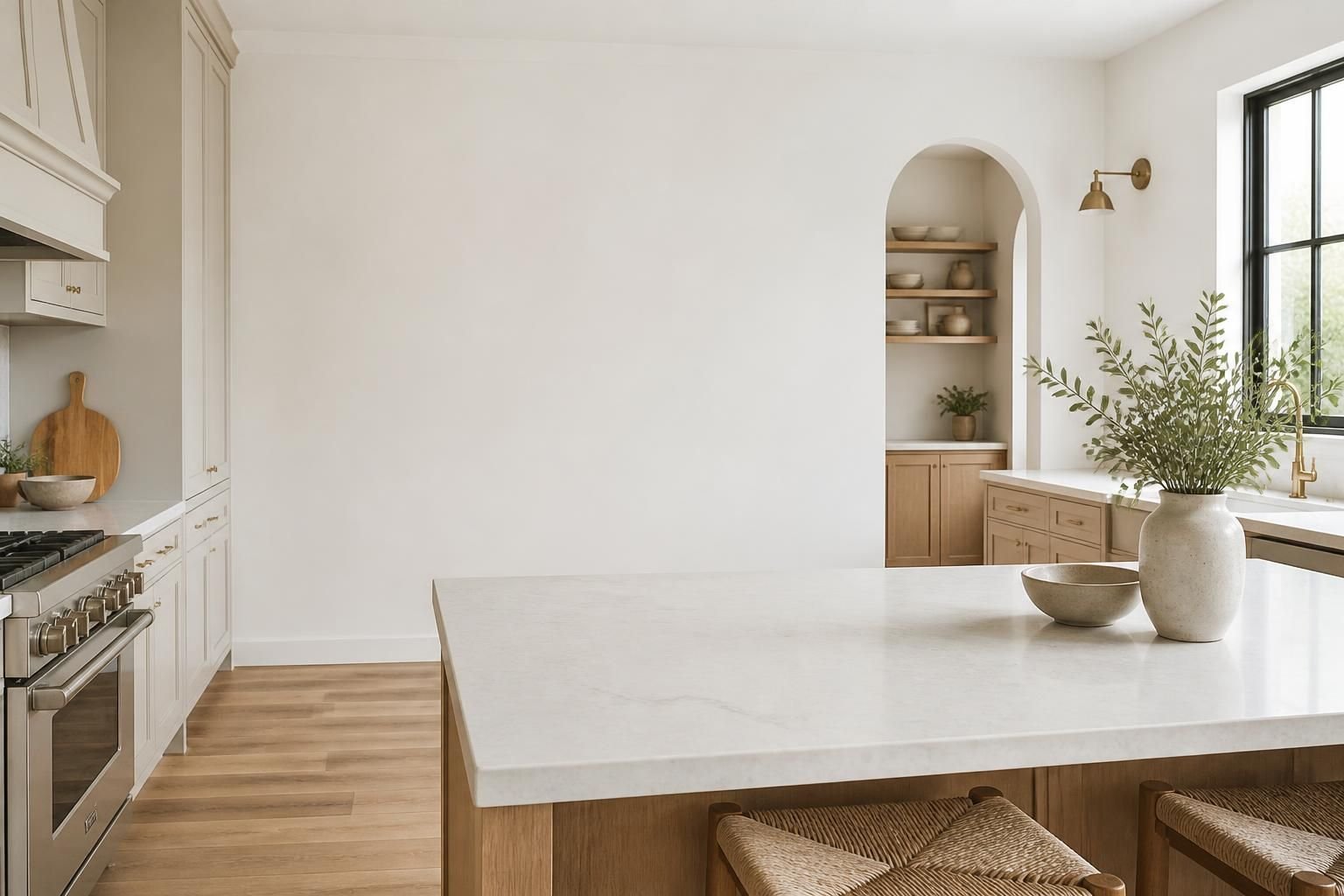
Quartz is consistent, which makes it easy to plan around and easy to match across pieces. Modern quartz that imitates marble has become convincing, though close up the veining tends to sit on the surface rather than run through the stone.
Seams
Quartz seams cleanly and predictably. Granite hides seams well in busy patterns and less well in uniform ones. Neither is a strong argument either way.
Durability and repair
Both scratch-resist well in normal use, and both can chip at an edge or a sink cutout. Granite chips can usually be filled and polished. Quartz repairs are harder to make invisible because the resin does not take polish the same way.
So which one
- Heavy cook who sets pans down: granite.
- Wants zero maintenance: quartz.
- Kitchen with hard direct afternoon sun on the counter: granite.
- Household with kids, spills and a white-ish counter: quartz.
- Wants a one-of-a-kind slab: granite.
- Wants predictable colour that matches a design plan: quartz.
- Outdoor kitchen: granite or porcelain, never quartz.
Frequently asked questions
Is one of them better for resale?
Buyers in this market respond well to both. Condition and colour choice matter more than which of the two it is.
Does granite contain radon?
Measured levels in ordinary granite countertops are negligible and well below anything of concern.
Can I cut directly on either one?
You can, and you will dull the knife. Both surfaces are harder than the blade. Use a board.
What about quartzite — is it a third option?
Yes, and it is a good one. It is natural stone, harder than granite, and looks closer to marble. It costs more and needs sealing. Our quartzite page covers it.
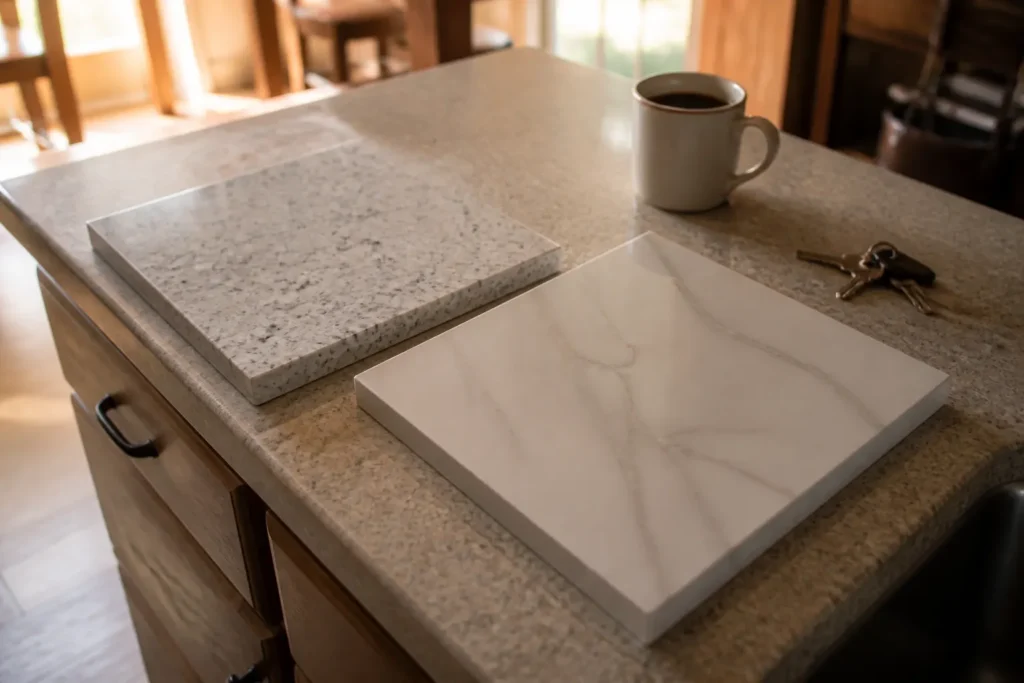
See both in your own light
Samples look different in a showroom than in your kitchen. We will bring both to you. Call (469) 649-8119.